View on Amazon
*Affiliate Link
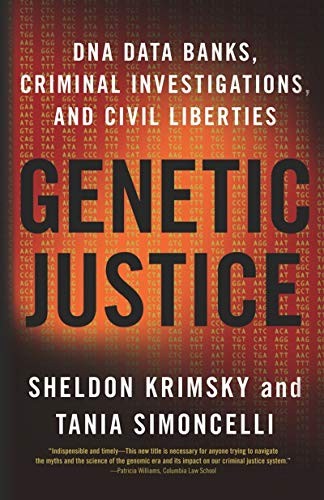
Archival Data Profile
- Page Count 425
- Publication Year 2010
- Publisher Columbia University Press
- ISBN-13 9780231517805
Genetic Justice
By Sheldon Krimsky, Tania Simoncelli
Archival Summary & Scope
National DNA databanks have expanded beyond convicted criminals to include arrestees, often without public awareness, sparking growing concerns over privacy and civil liberties. In this critical analysis, leading authors Krimsky and Simoncelli (medical ethics, civil liberties) examine how the U.S. balances DNA technology in criminal justice with citizens' privacy rights. They delve into the constitutional, ethical, and sociopolitical implications of expanded DNA collection, comparing U.S. trends with the UK, Japan, Australia, Germany, and Italy. Controversial topics explored include juvenile DNA collection, familial DNA searches, "DNA dragnets," and warrantless acquisition of "abandoned DNA." Most significantly, the authors debunk the myth of infallible DNA profiling, revealing profound implications for criminal justice.Archival Categorization Notes
This literature has been indexed under the primary pillar of True Crime. It was manually vetted for the Read For Truth database because it provides educational insights into Investigative Science, assisting researchers in locating established secondary research within this specific taxonomy.