View on Amazon
*Affiliate Link
Archival Data Profile
- Page Count 490
- Publication Year 2013
- Publisher CreateSpace Independent Publishing Platform
- ISBN-13 9781493766697
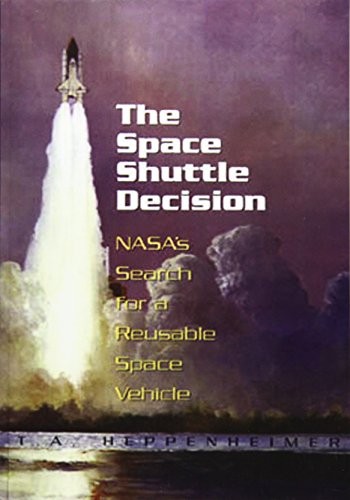
The Space Shuttle Decision
Archival Summary & Scope
Following the Apollo program's success, NASA faced intense pressure and budget cuts but sought to extend human presence in space. Initially, Administrator Thomas Paine proposed an expansive vision: Mars missions, space stations, and a reusable Space Shuttle for low-cost access.However, fiscal realities quickly curtailed these ambitions. NASA's focus narrowed to a joint space station and shuttle, attracting Air Force interest for military satellite launches. Despite congressional skepticism that nearly killed the project, NASA strategically shelved the station, securing the Department of Defense's vital political support for the Shuttle alone.
The Office of Management and Budget (OMB) then demanded radical design changes, forcing NASA to abandon a fully reusable two-stage concept for a significantly smaller, cheaper, and less capable version. While this compromise secured crucial endorsements, OMB Director George Shultz ultimately championed a more capable design, overriding further downsizing attempts. This pivotal decision paved the way for the Space Shuttle as we know it today, a testament to political maneuvering and engineering adaptation in a constrained environment.
Archival Categorization Notes
This literature has been indexed under the primary pillar of Space. It was manually vetted for the Read For Truth database because it provides educational insights into Science, assisting researchers in locating established secondary research within this specific taxonomy.


